Homeowner guide
HVAC Maintenance Tips for McAllen Homeowners
Most of what keeps a Valley air conditioner healthy takes ten minutes a month. Here is the homeowner list, plus the line where DIY should stop.
Filters: the highest-value habit
Airflow is the foundation of cooling performance. Everything downstream — coil temperature, dehumidification, compressor health — depends on moving the designed volume of air across the coil.
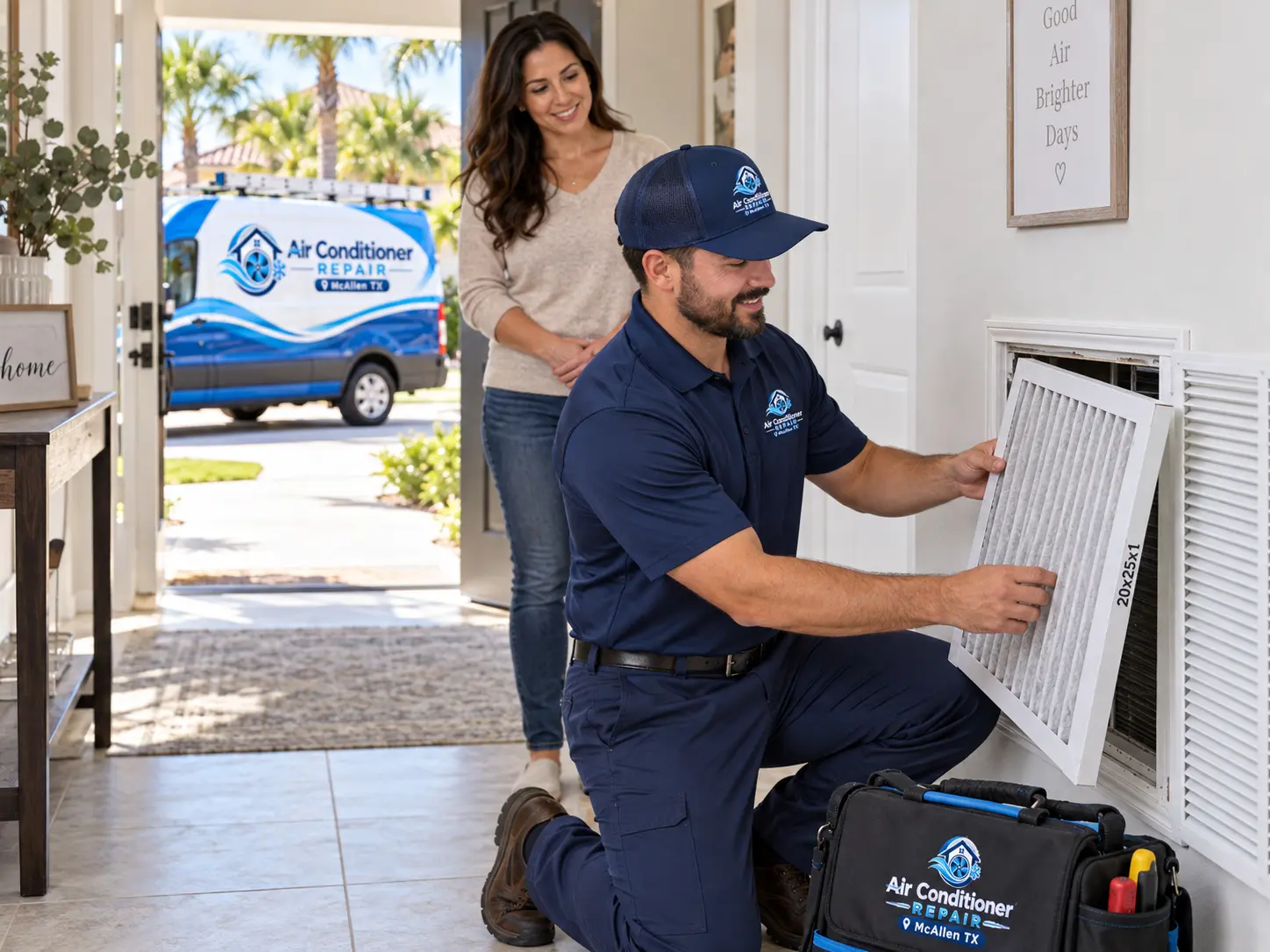
Buy filters in packs, note the size, and change on a schedule rather than by appearance. Very high MERV ratings can restrict airflow on residential blowers, so mid-range pleated filters are usually the better tradeoff unless a technician has verified your system can handle more.
Drain lines: monthly in summer
- Locate the condensate drain access near the air handler
- Pour about a cup of distilled white vinegar down the access monthly during cooling season
- Avoid bleach, which can corrode metal pans and fittings
- Watch for water at the outdoor drain termination — no drip on a humid day can mean a blockage
- Check the attic secondary pan for standing water after a hot, humid stretch
The outdoor unit
- Keep about two feet of clearance on all sides and five feet above
- Trim shrubs and keep grass clippings away from the coil
- Shut power off at the disconnect, then rinse the coil gently from the outside in with a garden hose
- Never use a pressure washer and never bend the aluminum fins
- Keep the unit level — a tilted condenser stresses the compressor mounts
- Do not cover the unit in summer; covers are only for extended shutdowns
Thermostat habits that actually help
Setting a thermostat far lower than your target does not cool the house faster — the system delivers the same capacity either way, it just runs longer. Pick a set point you can live with and let it hold.
For homes that are empty during the day, a modest setback of three to four degrees works well in the Valley. Deep setbacks can backfire, because recovering a hot, humid house takes long run times and the humidity lags behind the temperature.
- Keep the fan on Auto rather than On; continuous fan re-evaporates moisture off the coil
- Verify the thermostat is not in direct afternoon sun
- Check the schedule after any power outage
Around the house
- Keep all supply registers and return grilles unblocked by furniture and rugs
- Close blinds on west-facing windows during afternoon peak
- Run bath and kitchen exhaust fans to remove moisture at the source
- Add attic insulation if you are below current recommendations — it lowers the load your system fights
- Seal obvious gaps around attic access hatches and can lights
Where DIY should stop
- Anything involving refrigerant — it is regulated and requires certification
- Capacitors, which store a dangerous charge even with power off
- Opening electrical panels or the blower compartment on a live system
- Bending or brushing coil fins
- Repeatedly resetting a breaker that keeps tripping
Still not cooling? Talk to a local provider
If the checks above have not solved the problem, a technician can measure airflow and refrigerant pressures and identify the cause quickly. Same-day availability depends on provider participation, location, technician availability, and demand.
Answers
Questions homeowners ask
Keep reading
More helpful guides
How Often to Service Your AC
National advice says once a year. In a climate where cooling runs most of the year, twice a year fits better —…
Read more →Check Before Calling
Some no-cooling calls end with a filter or a breaker. This checklist is safe for any homeowner and takes about…
Read more →How Central A/C Works
Air conditioning does not create cold air; it moves heat out of your house. Once that clicks, most cooling pro…
Read more →Talk to someone
Need cooling help in McAllen today?
Call for the fastest answer on availability, or send a request and a local provider can follow up.
Same-day and 24/7 emergency services are subject to provider participation, location, technician availability, and demand.