
McAllen homeowner guide
AC Repair vs Replacement in McAllen, TX
Replacing an HVAC system is a major home expense. Before approving a complete replacement, homeowners may want to understand the diagnosis, repair options, equipment sizing, warranty status, and scope of work.
Same-day and 24/7 emergency services are subject to provider participation, location, technician availability, and demand.
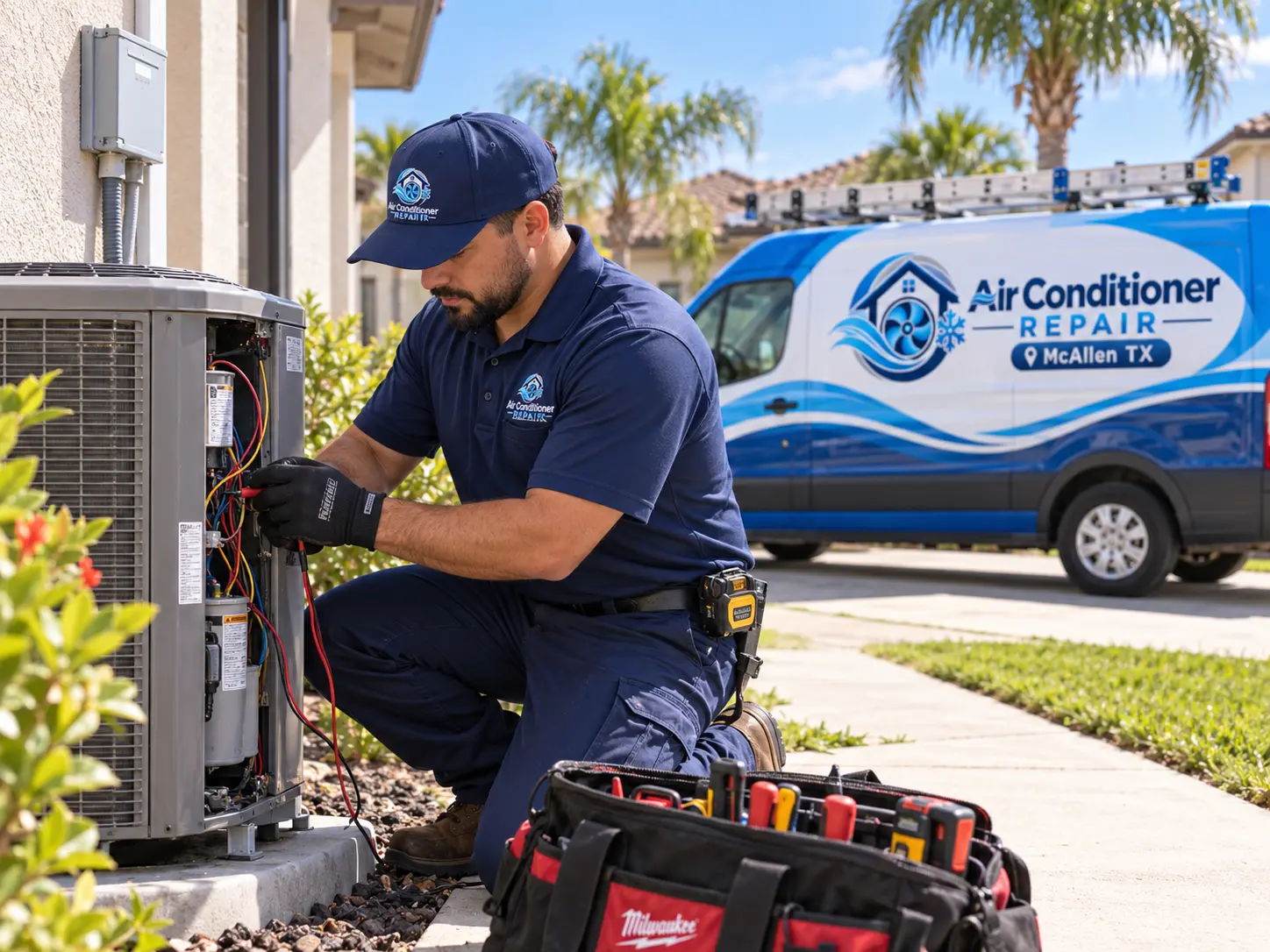
Start with the diagnosis, not the price
A replacement recommendation should follow a clear explanation of what failed and why. Two systems with the same symptom can have very different outcomes: a failed capacitor is a modest repair, while a failed compressor on a fifteen-year-old system is a different conversation.
Ask which component failed, how it was tested, and whether it can be shown to you. A provider who can explain the failure in plain language is giving you what you need to make the decision yourself.
Seven questions worth asking
- 1What component failed?
- 2Can the failed component be shown or explained?
- 3Is repair technically possible?
- 4What is the estimated repair cost compared with replacement?
- 5Is any equipment or component still under warranty?
- 6How was replacement system capacity determined?
- 7Will the work require a permit or licensed HVAC contractor?
Warranty check
Factors that tend to favor repair
- The system is relatively young and has no history of major failures
- The failed part is a common wear item such as a capacitor, contactor, or motor
- Repair cost is a small fraction of replacement cost
- The refrigerant type is current and readily available
- Cooling performance was satisfactory before the failure
- A parts warranty covers the major component
Factors that tend to favor replacement
Age is only one factor. A younger system with a major failure can sometimes be expensive to repair, while an older system with a relatively minor issue may still have useful service life. There is no universal age or repair-count threshold that decides the question for every home.
- The compressor or coil has failed on older equipment
- The system uses R-22, which is no longer produced and can be costly to service
- There have been repeated failures across recent seasons
- Repair cost approaches a meaningful share of replacement cost
- The system never cooled or dehumidified the home adequately
- Efficiency is low and the cooling season here is long
Refrigerant type and parts availability
If the nameplate lists R-22, that can change the math. R-22 has been phased down, so supplies are limited and costly, and a significant leak repair on aging equipment may not hold for long. Systems using R-410A generally remain serviceable, though newer equipment has begun transitioning to lower-global-warming refrigerants.
Ask which refrigerant your system uses, and whether the specific replacement parts are currently available, before authorizing a large repair.
Questions to ask before replacing
- 1What exactly failed?
- 2Is the component repairable?
- 3Is it covered by warranty?
- 4What is the repair cost?
- 5What is the replacement cost?
- 6Are there other known system problems?
- 7How was replacement equipment sized?
No single threshold
If you replace, get sizing right
Replacement is the one moment when sizing, airflow, and duct condition can be corrected. Installing the same capacity because that is what was there before repeats any original mistake.
In a humid climate, capacity that substantially exceeds the load can leave rooms cool but clammy. Ask how the recommended size was determined and whether the existing ductwork supports the airflow the new equipment needs.
- Load calculation inputs: square footage, ceiling height, insulation, glass, orientation, and shading
- Duct condition, sizing, and leakage
- Return-air capacity
- Room additions and any planned remodeling
- Indoor humidity performance, not just temperature
Before you sign anything
- Get the scope of work in writing, including equipment model numbers
- Confirm what is included: permits, refrigerant lines, drain work, electrical, thermostat, and haul-away
- Ask about the equipment parts warranty and the labor warranty separately
- Ask what happens if a needed part is unavailable or backordered
- Verify licensing and insurance independently before work begins
- Ask about the diagnostic or service-call fee and whether it applies toward the work
Compare your options before making a major HVAC decision
Ask for both a repair estimate and a replacement estimate in writing. A provider can walk through the trade-offs for your specific system.
Answers
Questions McAllen homeowners ask
Should I repair or replace an older AC?
It depends on the failed component, the system's age, the refrigerant type, repair history, warranty status, and how the repair cost compares with replacement. A single wear-item failure on a healthy system usually favors repair, while a compressor or coil failure on older R-22 equipment often favors comparing replacement.
What should I ask before replacing my HVAC system?
Ask what failed and whether it can be shown, whether repair is possible, how repair cost compares with replacement, whether anything is still under warranty, how the replacement capacity was determined, and whether a permit or licensed contractor is required.
Is the 5,000 rule useful?
Multiplying equipment age by repair cost and comparing the result to 5,000 is a rough screen at best. Refrigerant type, warranty status, overall condition, and the specific failure matter more than any formula.
Can I replace just the outdoor unit to save money?
Sometimes, but it is often unwise. Mismatched indoor and outdoor components can reduce capacity and efficiency and may affect warranty coverage. Ask the provider how the pairing was verified.
How long do air conditioners last in South Texas?
Long cooling seasons mean more run hours per year than in milder climates, so equipment here often shows its age earlier. Maintenance, airflow, and installation quality influence lifespan as much as the nameplate does.
Do I need a permit to replace an AC in McAllen?
Permit requirements are set by the local jurisdiction and depend on the scope of work, particularly when electrical or equipment changeouts are involved. Ask the provider whether a permit applies and who is responsible for pulling it, and verify with the city.
Keep reading
Related pages and guides
AC Replacement in McAllen TX
System changeout requests and what the visit covers.
Read more →AC Repair in McAllen TX
Repair service for systems that are not cooling.
Read more →HVAC System Sizing for McAllen Homes
How capacity should be determined.
Read more →How to Choose an HVAC Contractor in McAllen
Licensing, insurance, and scope questions to ask.
Read more →Talk to someone
Need cooling help in McAllen today?
Call for the fastest answer on availability, or send a request and a local provider can follow up.
Same-day and 24/7 emergency services are subject to provider participation, location, technician availability, and demand.