McAllen homeowner guide
AC Not Keeping Up With Texas Heat? Common Reasons
A system can be running, blowing air, and still fall behind once the afternoon sun loads the house. These are the causes providers find most often in Rio Grande Valley homes.
Same-day and 24/7 emergency services are subject to provider participation, location, technician availability, and demand.
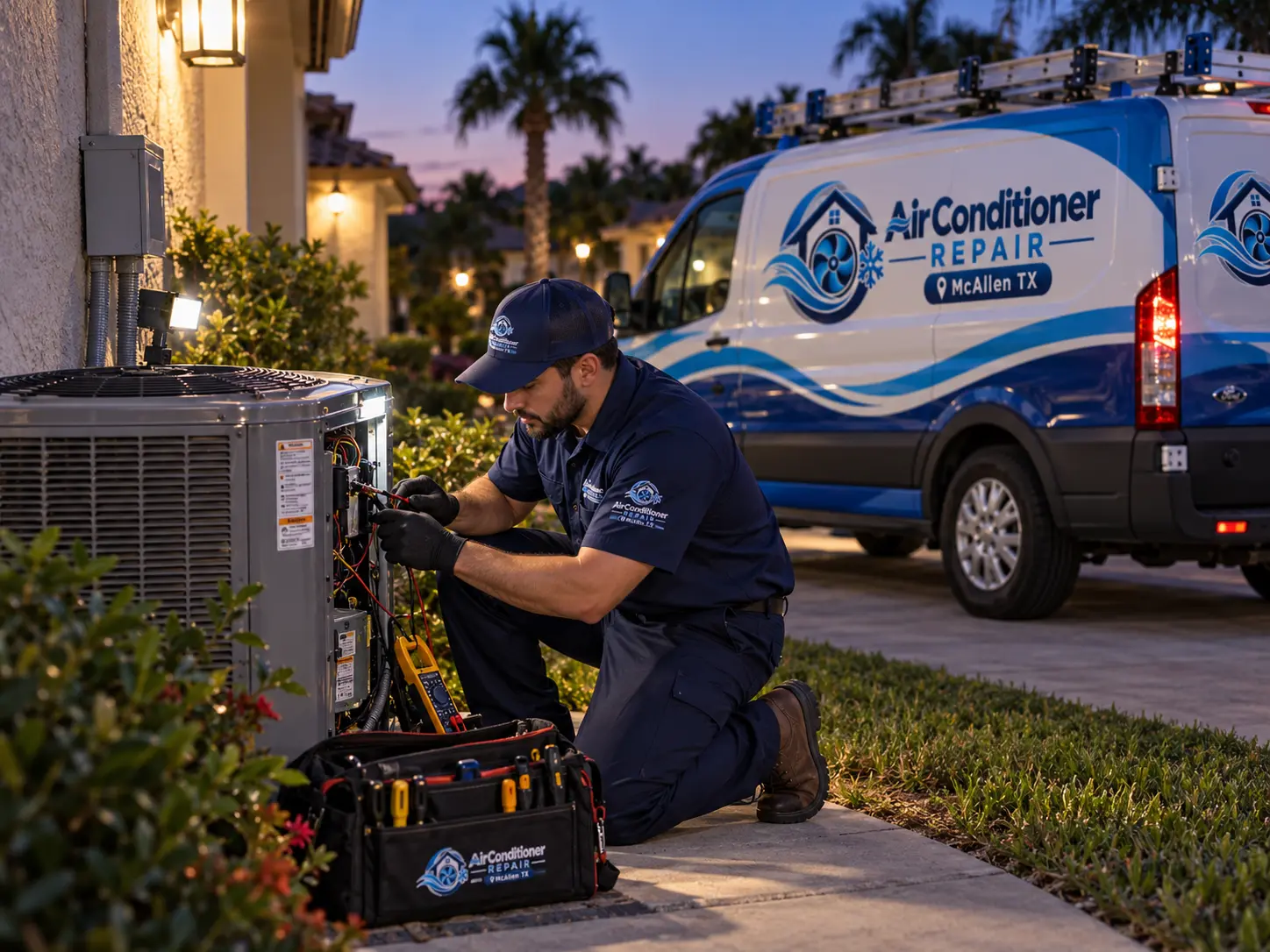
What 'not keeping up' actually means
Cooling is a balance. Heat enters the home through the roof, walls, windows, ducts, and air leaks, while the air conditioner removes heat and moisture. When removal falls below gain, indoor temperature drifts upward no matter how long the system runs.
That imbalance can come from the equipment side, the house side, or both. Understanding which side is contributing keeps homeowners from replacing a system that was never the main problem.
Equipment-side causes
- Restricted airflow from a loaded filter or an undersized return
- A dirty evaporator coil that cannot absorb heat from return air
- A dirty outdoor condenser coil that cannot reject heat to 100-degree air
- A refrigerant charge that is low, which may indicate a leak
- A weak blower motor or a failing capacitor
- A compressor that is losing capacity as it ages
- A thermostat or sensor reading the wrong temperature
House-side causes
- Thin or displaced attic insulation above the ceiling
- Duct leakage and poor duct design in a very hot attic
- Air leakage around windows, doors, recessed lights, and attic hatches
- Heavy west-facing sun exposure through untreated glass
- Room additions or enclosed patios that were never added to the cooling load
- Inadequate return air, which starves the system even when supply ducts are fine
A simple way to narrow it down
Homes that recover overnight but struggle by mid-afternoon often have a heat-gain or capacity issue. Homes that never recover, even at 3 a.m., more often have an equipment or refrigerant problem worth having inspected promptly.
- 1Note the indoor temperature and thermostat setting at 8 a.m. and again at 5 p.m.
- 2Feel the air at several supply vents — weak flow in some rooms points toward ducts.
- 3Hold a hand near the return grille; very weak return suction points toward airflow restriction.
- 4Check for ice or frost on the copper lines at the indoor unit.
- 5Note whether the home recovers within a few hours after sunset.
What a diagnostic visit usually covers
- Temperature difference between return and supply air
- Static pressure and airflow across the coil
- Refrigerant pressures and superheat or subcooling values
- Electrical readings on the compressor, blower, and capacitors
- Condition of both coils and the condensate drain
- A visual review of accessible ductwork and insulation
Ask before work begins
Losing the battle with the afternoon heat?
Call for the fastest answer on availability, or send a request and an independent local provider can follow up.
Answers
Questions McAllen homeowners ask
Why is my house hot even though the AC is running?
The system may be removing less heat than the home is gaining. Reduced airflow, dirty coils, a refrigerant problem, duct leakage in a hot attic, or insufficient insulation can all cause that gap. A provider can measure airflow and the temperature split to identify which factor dominates.
Can bad insulation make my AC look broken?
Yes. If attic insulation is thin or compressed, ceilings radiate heat into rooms all afternoon and the equipment can look undersized or failing even when it is operating within specification. Insulation and duct sealing often improve comfort without replacing equipment.
How cool should the air from my vents feel?
Technicians generally look for a meaningful temperature drop between return and supply air, measured at the equipment. A small drop can indicate an airflow or refrigerant problem, while a very large drop may indicate restricted airflow. Interpreting the number requires measurement, not touch.
Should I close vents in unused rooms to help?
Usually not. Closing too many supply vents raises duct pressure and reduces total airflow, which can make cooling worse and increase the chance of a frozen coil. Balancing should be done as part of a system-balancing review.
Keep reading
Related pages and guides
Is It Normal for My AC to Run All Day?
When continuous runtime is expected in Valley heat.
Read more →Why a Bigger AC Can Make a Home Feel Humid
Why oversizing is not a fix for a hot house.
Read more →AC Not Cooling? Common Causes
The causes providers rule out first, in order.
Read more →Emergency AC Repair in McAllen
Request after-hours service when the home is not cooling at all.
Read more →Talk to someone
Need cooling help in McAllen today?
Call for the fastest answer on availability, or send a request and a local provider can follow up.
Same-day and 24/7 emergency services are subject to provider participation, location, technician availability, and demand.